Understanding Asphalt Installation Techniques Used by Queens Professionals

Proudly serving College Point with dedication and expertise.

College Point and the broader Queens County corridor represent one of the most demanding environments for asphalt installation in the northeastern United States. The peninsula's proximity to the East River exposes pavement to coastal salt air, while the borough's infamous temperature swings — from well below freezing in January to high heat and humidity in July — put constant stress on asphalt surfaces throughout their service life. Understanding how professional Queens paving contractors approach installation helps property owners make informed decisions and set realistic expectations for performance and longevity.

The asphalt paving techniques used on a commercial parking lot in Flushing or an industrial access road in College Point are meaningfully different from residential driveway work. Commercial and industrial applications require careful sub-base engineering, load-specific mix design, precise compaction sequencing, and often custom drainage solutions. Queens contractors who specialize in this type of work bring a level of technical depth that generalist paving companies simply do not offer, and that expertise is directly visible in the finished product years after installation.

ZIP code 11356 and the surrounding Queens neighborhoods experience freeze-thaw cycles that can occur dozens of times each winter. Each cycle expands and contracts the sub-base and the asphalt layer, generating stresses that eventually manifest as cracking if the original installation did not account for these forces. Professional asphalt paving contractors in Queens design their installations with thermal movement in mind, choosing appropriate mix designs, controlling joint placement, and ensuring adequate drainage to minimize water intrusion that amplifies freeze-thaw damage.

The connectivity of Queens — with major arterials like the Whitestone Expressway, Northern Boulevard, and College Point Boulevard running through or near College Point — creates heavy commercial vehicle traffic patterns that industrial properties must account for in their pavement design. Trucks, delivery vehicles, and loading dock equipment generate point loads and turning stresses that standard residential asphalt specifications cannot withstand. A paving contractor who understands the operational reality of Queens commercial properties designs installations that hold up to these real-world demands.

— § —

Address

Grey Ruso - Asphalt, Paving & Construction

20-48 130th St, College Point, NY 11356

Phone

718-358-1836

Website

https://www.greyruso.com/

Current Weather in College Point

College Point — Wikipedia

Asphalt Concrete — Wikipedia

Google Maps — Grey Ruso - Asphalt, Paving & Construction

Driving Directions

What Sub-Base Preparation Techniques Do Queens Paving Contractors Use?

The foundation of any durable asphalt surface is what lies beneath it. Professional Queens paving contractors begin every installation project with a thorough sub-base assessment — evaluating existing soil conditions, load-bearing capacity, and drainage characteristics before specifying the base course. In College Point, where certain areas sit on fill material or near the waterfront, this assessment often reveals conditions that require additional work before asphalt can be placed. Typical commercial installations call for a crushed stone sub-base compacted to a minimum 95% Modified Proctor density, with base depth ranging from four inches for light vehicle traffic to twelve or more inches for heavy truck applications. Commercial asphalt paving

See our full range of paving services for College Point properties
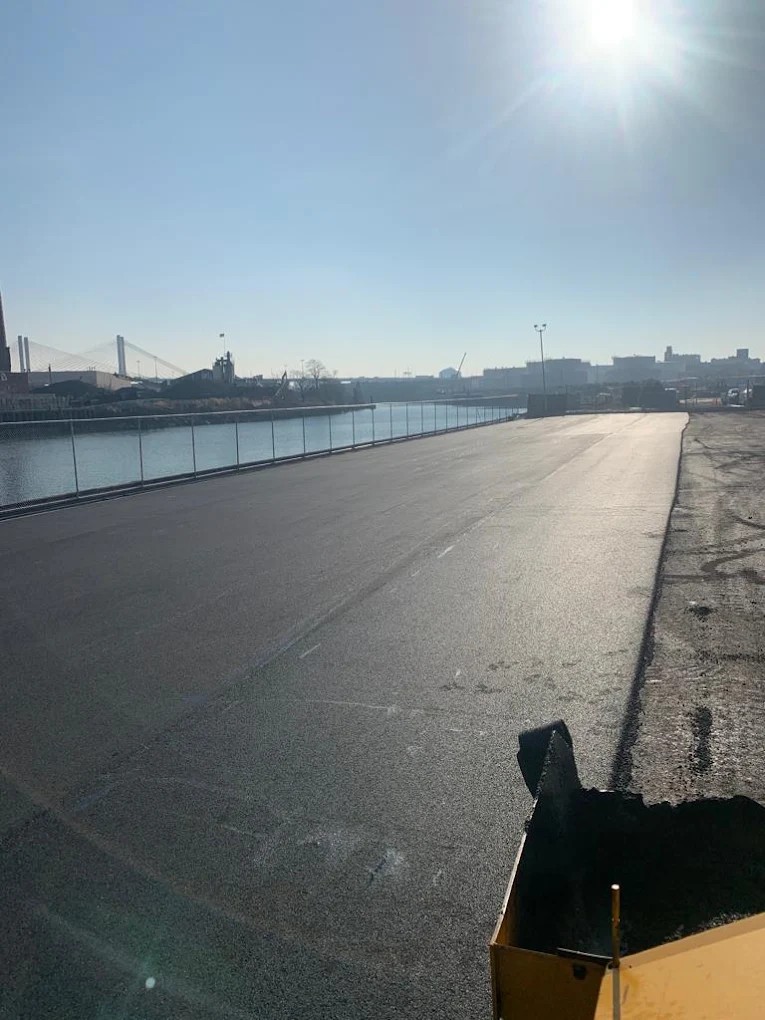
Sub-base compaction by Grey Ruso paving crew in Queens — commercial asphalt installation foundation work

How Do Queens Professionals Choose the Right Asphalt Mix for Commercial Applications?

Asphalt mix design is a technical discipline governed by NYSDOT specifications and AASHTO standards. Commercial paving projects in Queens typically require a dense-graded hot-mix asphalt (HMA) with aggregate gradation, binder content, and void properties calibrated to the expected traffic loading and climate conditions. Queens contractors experienced in commercial work specify different mixes for parking areas, driving lanes, and entrance aprons — recognizing that the stress patterns in each zone are fundamentally different. The top surface course for a high-traffic commercial lot in College Point will commonly use a finer-graded mix for smooth finish and durability, while the binder course beneath uses a coarser mix for structural strength. Asphalt paving company near me

What Compaction Techniques Ensure Long-Lasting Asphalt in Queens?

Proper compaction is the single most critical execution step in asphalt installation, and it is also the step most commonly rushed on competitive-bid projects. Professional Queens contractors use steel-drum vibratory rollers and rubber-tire rollers in a carefully sequenced compaction pass pattern, achieving target air void content of three to five percent in the finished mat. Compaction must begin promptly after placement while the mat temperature is in the correct range — typically above 175°F for breakdown rolling. In College Point's cooler shoulder seasons, experienced crews adjust haul distances and paving pace to maintain adequate mat temperature through the entire compaction sequence. Under-compacted asphalt ravels and fails prematurely, while over-compaction can cause shoving and cracking.
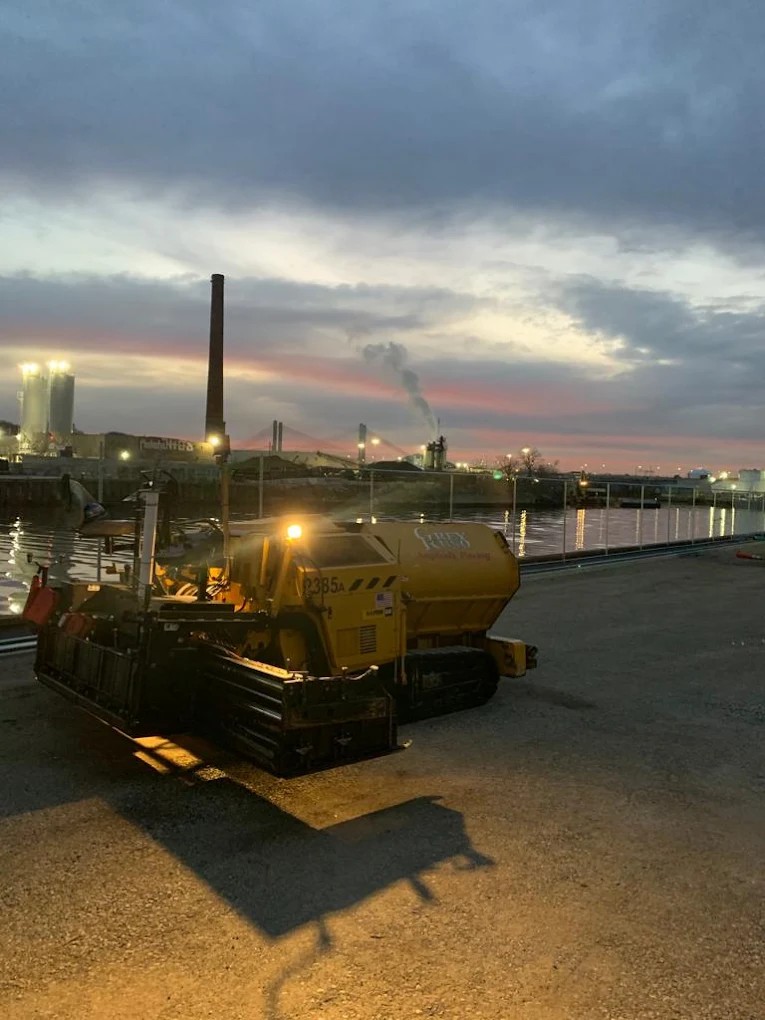
Asphalt compaction roller on Queens commercial paving project — Grey Ruso asphalt paving contractor

How Do Flushing and Whitestone Commercial Properties Benefit From Proper Joint Construction?

Longitudinal and transverse joints are the weakest points in any asphalt pavement, and their proper construction is a hallmark of experienced Queens commercial paving companies. Cold joints — where fresh asphalt meets a previously cooled layer — are particularly vulnerable to cracking and water infiltration if not properly compacted and sealed. Professional contractors in the College Point, Flushing, and Whitestone market use a range of joint construction techniques, including joint heaters, tack coat application on the vertical face, and matched compaction patterns, to minimize the density differential at the joint. Properties near high-traffic corridors like Northern Boulevard benefit especially from careful joint work because heavy vehicle traffic concentrates stress precisely at these locations.

What Drainage Integration Techniques Do Queens Paving Professionals Rely On?

Drainage is engineered into the asphalt installation from the design stage, not treated as an afterthought. Queens commercial paving contractors perform site drainage analysis to establish positive flow gradients across the finished surface — typically one to two percent cross-slope — and design catch basin placement to intercept runoff before it concentrates. For College Point properties with limited storm sewer capacity, French drain systems and permeable pavement edge treatments can supplement surface drainage. Grey Ruso's long history of paving in Queens means the company understands the borough's stormwater infrastructure and designs accordingly, ensuring that new asphalt installations do not create drainage problems for neighboring properties or violate NYC DEP guidelines.

Grey Ruso - Asphalt, Paving & Construction has been applying professional-grade asphalt installation techniques in College Point and across Queens since 1987. Grey Ruso

Explore College Point

From Flushing Meadows-Corona Park

From Unisphere

From Queens Botanical Garden

From College Point

From Queens County

Geo-Tagged Map

Areas We Serve

Grey Ruso - Asphalt, Paving & Construction serves customers throughout College Point and Queens County, including Whitestone, Flushing, Malba, Beechhurst, Murray Hill, Bayside, Auburndale, and Fresh Meadows. Whether you're in Flushing managing a commercial complex or in Whitestone overseeing an industrial facility, our asphalt paving contractor team understands your specific pavement challenges.

Frequently Asked Questions

Professionally installed commercial asphalt in College Point and Queens County typically lasts 20 to 30 years with proper maintenance, including crack sealing every two to three years and sealcoating every four to five years. The freeze-thaw cycles characteristic of the Queens climate accelerate surface aging, making early crack intervention especially important. Properties near heavy truck corridors may see more rapid surface wear and should budget for resurfacing at the 15-year mark depending on traffic volume.

Most commercial parking lot installations in College Point and the surrounding Queens neighborhoods take two to five days for the paving work itself, though the total project timeline extends longer when sub-base remediation is required. Grey Ruso coordinates closely with property managers to minimize operational disruption, typically phasing work so that portions of the facility remain accessible. Cure time before full vehicle loading is approximately 24 to 72 hours depending on ambient temperature and mix design.

Hot-mix asphalt (HMA) is produced at approximately 300°F and must be placed and compacted before it cools below workable temperatures. It is the standard for commercial asphalt paving in Queens because it achieves the highest density and durability when properly installed. Cold-mix alternatives are suitable only for temporary repairs. Commercial paving companies in College Point and throughout Queens County specify HMA for all new installations and full-depth reclamation projects because the performance difference over the pavement's service life is significant and measurable.

The approach depends on the condition of the existing surface. For pavement in reasonably sound structural condition, milling the top inch or two and overlaying with fresh asphalt is the most cost-effective technique. Where the sub-base has failed, full-depth removal and replacement is necessary. Grey Ruso performs thorough condition assessments before recommending an approach, using core samples and deflection testing where warranted. College Point commercial property owners benefit from honest assessments that match the solution to the actual condition rather than defaulting to the most expensive option.

The optimal season for asphalt paving in College Point is late spring through early fall — roughly May through October — when ambient temperatures consistently exceed 50°F and the risk of rain is manageable. Cold temperatures significantly impair compaction quality and cause premature cooling of the mat. However, experienced Queens paving contractors can complete successful installations outside this window using heated trucks, extended-haul restrictions, and accelerated rolling sequences. Grey Ruso has successfully completed winter paving projects for clients with operational constraints that prevent seasonal scheduling.